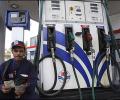
Petrol price was on Tuesday hiked by Rs 2.58 a litre and diesel by Rs 2.26 per litre, the second increase in rates this month.
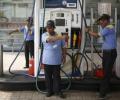
International oil prices have hit a six-month low, helping Indian fuel retailers breakeven on petrol but they continue to lose money on diesel - the most used fuel in the country, officials said. The world's best-known crude benchmark, Brent was trading at $94.91 per barrel on Thursday after concerns of a global recession led to it slipping to a six-month low of $91.51 on the previous day. The current rates are a relief to India, which is 85 per cent dependent on imports for meeting its oil needs.
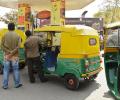
CNG price in the national capital on Friday was hiked by 80 paise per kg, while piped cooking gas rates were increased by a steep Rs 5 per cubic metre on the back of the government raising input natural gas prices to record levels. CNG price in the National Capital Territory (NCT) of Delhi has been increased to Rs 60.81 per kg from Rs 60.01, according to information posted on the website of Indraprastha Gas Ltd (IGL) -- the firm which retails CNG and piped cooking gas in the national capital. This is the sixth increase in CNG prices in the last month.

The winner of the 2001 Nobel Prize for Economics says recovery could be difficult if the crisis in Egypt spreads to the entire region.
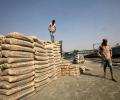
The 31st meeting of the Goods and Services Tax (GST) Council, held in December 2018, deferred a decision to reduce the GST rate for cement from 28 per cent to 18 per cent. This was despite recognising that cement - along with automobile parts - remained among the few mass-consumption items still taxed at the highest slab, which was originally meant for luxury and sin goods.

Finance Minister Arun Jaitley said the excise duty cut would have an impact of Rs 10,500 crore on central government's tax revenues.

Diesel price needs to be revised upward, or subjected to higher taxes, as misuse of subsidized diesel was adding to pollution and public health costs, the government's pre-budget economic report card said on Thursday.

India's top fuel retailers IOC, BPCL and HPCL together lost around $2.25 billion (Rs 19,000 crore) in revenue for keeping petrol and diesel prices on hold during elections in five states, including Uttar Pradesh, Moody's Investors Services said on Thursday. State fuel retailers did not revise petrol and diesel rates for a record 137 days despite prices of crude oil (raw material for producing fuel) rising to $120 per barrel compared to around $82 in early November when the hiatus began. "Based on current market prices, the oil marketing companies are currently incurring a revenue loss of around $25 (over Rs 1,900) per barrel and $24 per barrel on sale of petrol and diesel, respectively," Moody's said in a report.

Some of the key names include: Maruti, M&M, Ashok Leyland, Britannia, Ultratech, JK Cement, Havells, Voltas, Amber, Metro, Trent, LemonTree, Indian Hotels, Niva Bupa, HDFC Life, IGL, Acme Solar, Suzlon, Swiggy, Delhivery, ICICI Bank, HDFC Bank, Bajaj Finance, Shriram Finance," according to a report by Motilal Oswal Financial Services.
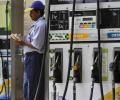
After today's reduction, petrol price has been cut by Rs 12.27 per litre cumulatively since August.

The calculations done on June 25 were mostly based on the average international price in the first fortnight of June.

With fuel being the main input cost for the transport sector, rise in cost of operations is a given. The sector is unsure on the extent of being able to pass this on through rentals or to absorb it with higher volumes.
Petrol engines development has progressed well over the years and many of the current cars in India give a good mileage though they have to yet catch up with the fuel efficiency of diesel cars. Here we look most fuel-efficient petrol cars.
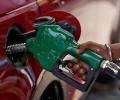
While consumers feel that petrol pinches directly, diesel hurts indirectly, as it is an input in almost all the goods and services we use.

The Congress took out marches and observed bandh at several places on Saturday to protest against rising fuel prices.

In the first reduction in rate in two months, jet fuel or ATF price on Thursday was cut by 3 per cent in line with softening international crude oil prices. Aviation turbine fuel (ATF) price was reduced by Rs 1,887 per kilolitre, or 3 per cent, to Rs 58,374.16 per kl in the national capital, according to a price notification of state-owned fuel retailers. This is the first reduction in rates after four rounds of increase since February. Rates were increased by Rs 3,246.75 per kl on February 1, followed by a 3.6 per cent hike on February 16, and a steep 6.5 per cent raise on March 1. On March 16, prices were again raised by Rs 860.25 per kl. On Thursday, a Rs 10 per cylinder reduction in price of domestic cooking gas LPG also came into effect.

State governments have requested the Centre for export incentives, lifting of import duty in the case of cotton for the textile sector and GST exemptions.
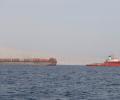
US strikes on Iran's three main nuclear facilities have once again raised concerns that Tehran might shut down the Strait of Hormuz - one of the world's most critical chokepoints, through which a fifth of global oil and gas supply flows.
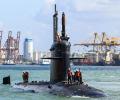
'There's an urgent requirement, particularly for the Indian Ocean region, as China's naval presence grows, and with Pakistan also acquiring more submarines.'

Jet fuel (ATF) price on Saturday was slashed by 4.5 per cent and that of commercial LPG used in hotels and restaurants by Rs 25.5 per 19-kg cylinder. The price of a 19-kg commercial LPG cylinder was cut to Rs 1,859.50 in the national capital from Rs 1,885, according to a price notification from state-owned fuel retailers. This is the sixth reduction in price of commercial LPG since June, in step with softening international energy prices.
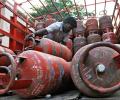
Cooking gas LPG price on Wednesday was hiked by Rs 15 per cylinder in line with a surge in international fuel prices. Rates of both subsidised and non-subsidised LPG prices were hiked, oil company officials said. Cooking gas now costs Rs 899.50 per cylinder in Delhi.
Expecting oil prices to remain under pressure, Fitch Ratings said deregulation of diesel prices in October will help in lowering the under-recoveries (which is nothing but international petroleum prices minus the subsidised retail rates).
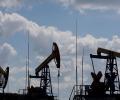
Billionaire Mukesh Ambani's Reliance Industries Ltd is estimated to have earned 724 million euros (about Rs 6,850 crore) from exporting fuel made from Russian crude oil to the US in one year, an European think tank said in a report. "From January 2024 to the end of January 2025, the US imported EUR 2.8 billion of refined oil from six refineries in India and Turkey that process Russian crude.

India and the UK on Thursday inked a landmark free trade agreement (FTA) that will cut tariffs on British whisky, cars and an array of items, besides boosting bilateral trade by around $34 billion annually.
The over-recovery on diesel for such companies reached Rs 3.56 a litre for the first fortnight of October.

India's fuel sales fell in the first half of April as a record rise in prices in a short 16-day period dented demand, preliminary industry data showed on Saturday. Petrol sales fell almost 10 per cent in the first half of April when compared with the same period in the preceding month, while diesel demand slid 15.6 per cent. Even cooking gas LPG, which had consistently shown growth even during the pandemic period, saw a 1.7 per cent month-on-month fall in consumption during April 1-15.

'SUV is a very intensely fought category, unlike hatchbacks and cars.'
Investors shunned shares of oil marketing companies (OMCs) on Friday as they feared that the government's decision to cut retail prices of petrol and diesel could hurt the companies' profit margins in the near term. On Thursday, the government announced that OMCs will reduce pump prices of petrol and diesel after a record 22 months, making them cheaper by Rs 2 per litre in the national capital. The changes were effective from Friday.
The price of petrol has risen by 83 paise per litre in the past nine days and diesel by 73 paise

The government on Thursday allowed state-run oil majors to fix diesel prices on their own in order to reduce an expanding subsidy bill and budget deficit. Oil companies announced a dual price mechanism while hiking the rates.
The thumb rule, say experts, is that if the monthly running is less than 1,800 km, a petrol model would prove cheaper in the long run.
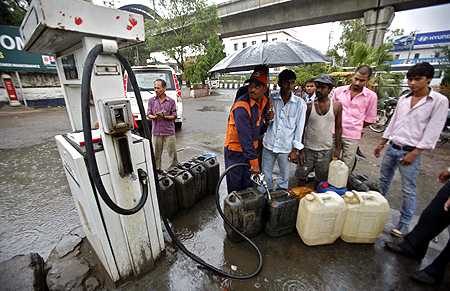
Petrol price was on Saturday cut by Rs 0.50 per litre but there will be no change in rates of diesel.
Public sector oil companies have demanded a Rs 1.60 per litre increase in diesel price and Rs 0.65 per litre hike in petrol prices in step with the surge in international oil prices.
.jpg)
State-owned oil firms are likely to announce reduction in rates, made possible because of softening in international oil rates, this evening, government and industry sources said.

The recurrent increases in fuel prices over the past 10 days are eating into the margins of transporters, who will be forced to pass on the hikes to their customers. This, in turn, is set to make the prices of daily consumables and other goods dearer, affect consumption, and slow economic growth, said transporters and analysts. Freight rates on grand trunk routes have shot up 3-4 per cent month-on-month in the past few days, according to the Indian Foundation of Transport Research & Training (IFTRT).
State-owned fuel retailers are losing close to Rs 3 per litre on selling diesel while the profit on petrol has trimmed due to recent firming up in international oil prices, industry officials said detailing reasons for continuing to hold retail prices. Indian Oil Corporation (IOC), Bharat Petroleum Corporation Ltd (BPCL) and Hindustan Petroleum Corporation Ltd (HPCL), who control roughly 90 per cent of India's fuel market, 'voluntarily' have not changed petrol, diesel and cooking gas (LPG) prices for almost two years now, resulting in losses when input cost was higher and profits when raw material prices were lower.
The change from wholesale to retail inflation as an anchor means that the weightage of diesel in inflation has decreased

The government had last week hiked diesel prices by Rs 5.63 a litre and capped the number of subsidised LPG cylinders to six per family a year.
Under-recovery or the difference between retail price and its imported cost on diesel was 8 paisa per litre in the first half of September.

Oil companies on Wednesday slashed petrol and diesel prices by Rs 2, with effect from midnight tonight.
